What freediving instructors see every week
This takes about 4 minutes to read.
We’ve all seen it.
A group of enthusiastic beginners, excited about good conditions and ready to become freedivers.
But things never go to plan.
While a lot of students progress, many others get stuck within the first five metres. They come back up, try again, can’t open their ears properly, get stuck again, and the frustration builds,
Whether you’re an instructor or a student, you’ve likely encountered this in a beginner course.
It’s not just your group
Curious about how common this was, I put out a survey to figure out how prevalent these issues are.
A total of 52 active instructors representing 33 nationalities, and responsible for teaching 3,100 students worldwide, responded.
The findings are pretty striking: if you put 10 beginners in a beginner course today, you won’t get 10 new certified freedivers.
For most instructors (52%), between 2 and 3 students out of 10 do not reach their depth requirements (20–30%).
For almost a quarter (23%), it’s 4-5 out of 10 (40–50%) failures.
Across all instructors, this results in about 27% of students not finishing their course because of equalization.
Of the students who do finish the course requirements, another 22% still struggle with equalization throughout the course.
This suggests that on most courses, equalisation isn’t a small thing - it’s a big part of the overall outcome.
The interesting part is that this pattern also stays the same across all levels of instructor experience.
Why this keeps happening
At first glance, it’s easy to assume this comes down to teaching, and that’s partly true.
Instructors are not all the same: some are very strong when it comes to teaching equalization and can spot what’s going wrong quickly, adjust in the moment, and guide students step by step.
Others are still building that experience - and that’s ok.
But despite variations in teaching quality, the limiting factor remains the same.
That limitation is time.
A typical beginner course runs over a few days, during which students learn a lot at once: safety, technique, relaxation, breath control, and awareness.
But the length of a course does not always align with equalization. That’s because it’s not just information - it’s a physical motor skill.
Building a new movement pattern in the body takes repetition, not just explanation and demonstration.
Freediving environments don’t tend to allow for much development of new motor skills, as you’re in the water, between sessions, or in the classroom.
And even with a very skilled instructor, there is only so much you can do inside that window.
What instructors actually deal with
When you talk to instructors about this, the answers are surprisingly consistent. They’re pretty confident about what’s going wrong, and most can spot the issue quickly.
Instructors usually know what a student needs to change, but the difficult part is getting that change to actually stick.
The challenge, simply, is that there isn’t enough time in the course structure to build patterns properly.
So, they do what they can within the course.
That often means staying a bit longer after sessions, working one-on-one with students, giving extra exercises, or answering messages and calls outside the course.
But even with that, it does not always lead to a clean result. Because “passing” does not always mean it felt easy or enjoyable.
From the same survey, about 22% of students who pass still struggle with equalization throughout most of their dives.
The part nobody sees
From the outside, it can look like a simple problem. Someone can’t equalise, so the instructor steps in and gets sorted. But the reality is a little more complex.
For the student, it often feels very different due to the buildup of frustration, pressure, and expectations. A few days that were supposed to feel exciting and fun turned into stops, tries, and not quite getting there.
At the same time, instructors are doing everything they can within a tight schedule, often putting in extra time just to help the students move forward.
Everyone is trying to make it work within the same limits - but it’s not the student or instructor's fault: it’s timing.
And in the end, we only get one real shot at a student’s positive first freediving experience.
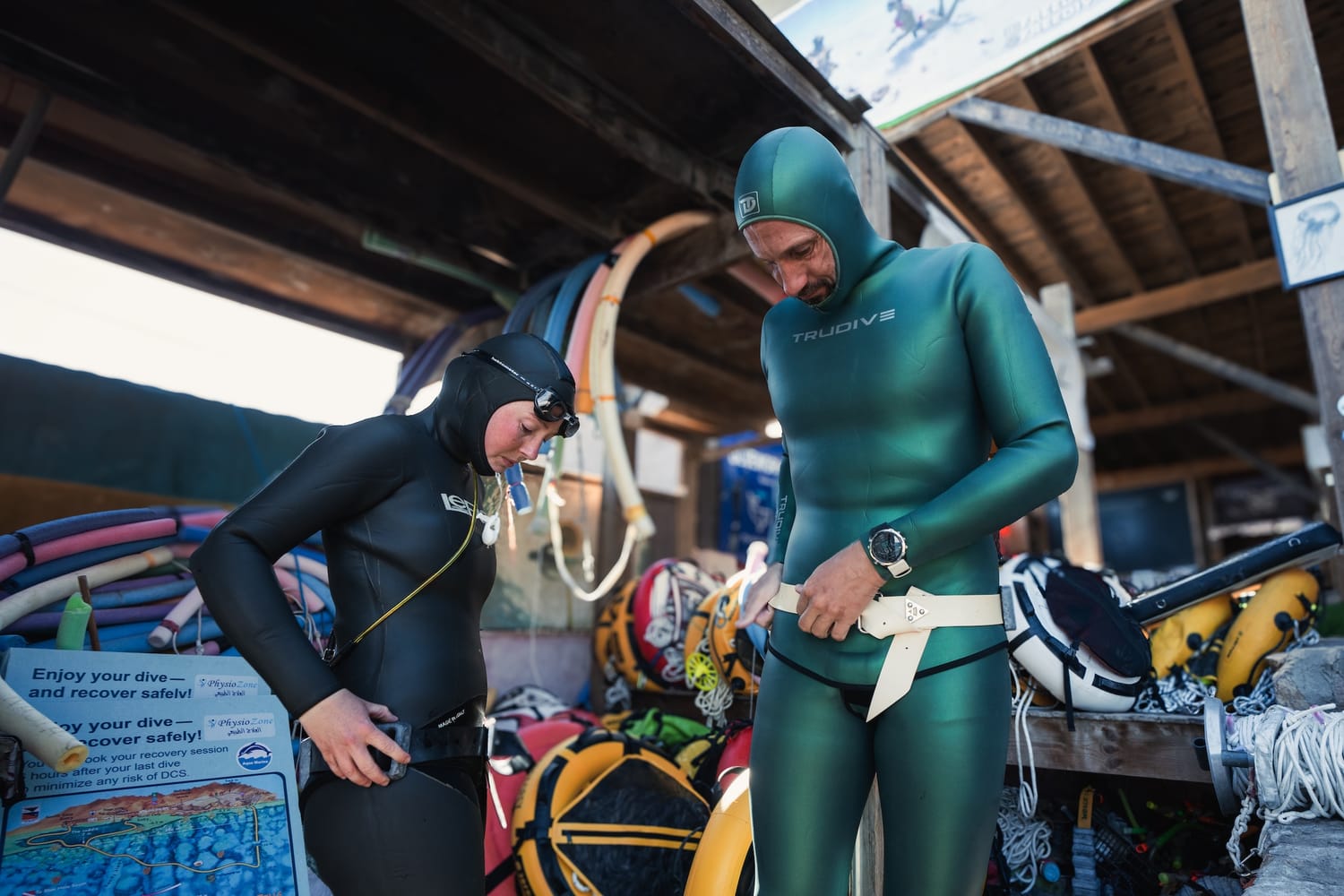
What can we learn from all of this?
With more prep work before beginner courses, the results of the courses are likely to improve.
The instructors are very clear on this when asked: 92% said pre-course preparation would significantly or completely improve the experience, making it clear this is not up for debate.
If equalization is a physical skill that only forms through repetition, why are we still trying to teach it in a course instead of building it beforehand? Are we doing students justice by starting the clock too late?
And most importantly, what tools can help instructors and students address this concern, clearly and effectively?
Did you like this article? Spread the word!


Get the latest updates from our newsletter & blog



The Dry Sessions All rights reserved. © 2026